

By XAOBAG Editorial Team · Contact: sales@xaobag.com
Good news: your phone, water bottle, charger, sunglasses, emergency snack and the three receipts you refuse to throw away may finally fit in the same bag again.
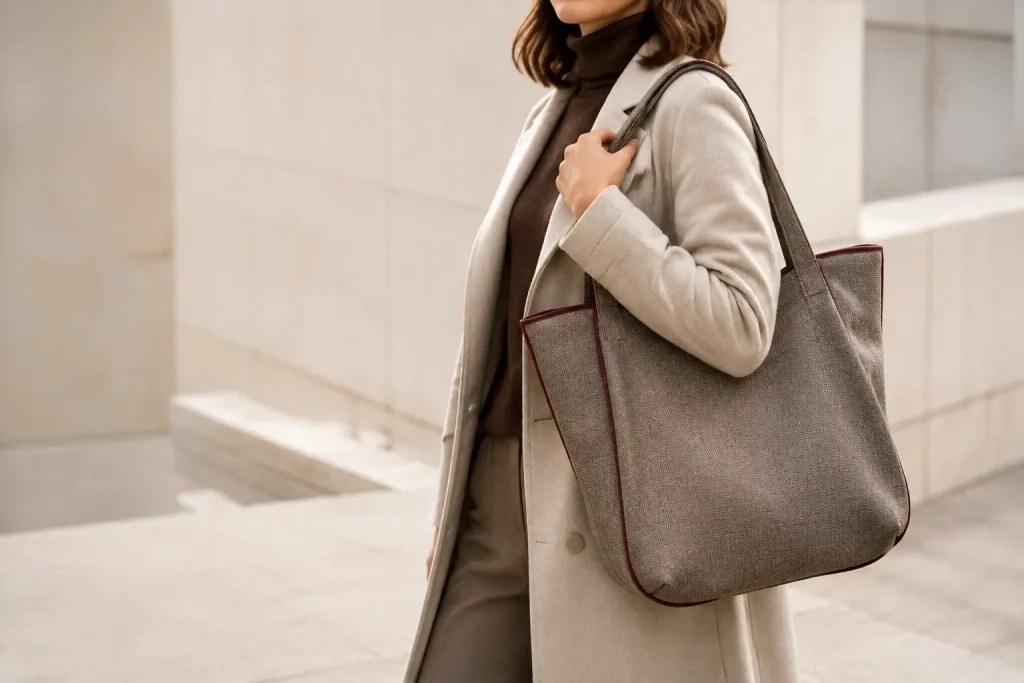
After seasons dominated by tiny purses and highly structured silhouettes, Fall 2026 is making room for bags with real capacity. But this is not simply the return of the giant, boxy tote. The new generation of carryalls is bigger, softer and often surprisingly flat.
Recent Fall 2026 trend coverage from Vogue, Who What Wear, NET-A-PORTER and Marie Claire points in the same general direction: larger shoulder bags, flat totes, soft carryalls, tactile surfaces and practical shapes are becoming more visible. The interesting part is not just that bags are growing. It is how designers are making volume feel lighter, calmer and easier to wear.
For shoppers, that means more room without necessarily carrying something that looks like weekend luggage. For designers, buyers and private-label brands, it raises a more useful question: how do you turn this runway and editorial mood into a bag that people will actually carry?
Quick take: Fall 2026 is not simply bringing back big bags. It is redesigning capacity through flatter profiles, softer structures and richer textures.
The “Big Bag” Is Back—but It Has Changed
Oversized totes are not new. What feels different in Fall 2026 is the balance between capacity and visual weight.
Instead of relying only on deep gussets, thick reinforcement and rigid construction, many current silhouettes create scale through a wider or longer body. A bag can look generous from the front while remaining relatively slim from the side. Softer materials also allow the body to sit closer to the wearer rather than projecting outward like a portable filing cabinet.
Vogue’s Fall 2026 coverage highlights “super shoulder bags” and all-rounder carryalls designed to accommodate everyday essentials while remaining sleek enough to sit under the arm. NET-A-PORTER similarly points to oversized, soft and slouchy totes as a key direction for the season.
So yes, the big bag is back. No, it does not need its own parking space.
Why Flat Totes Suddenly Make Sense
At first, “flat” and “oversized” sound contradictory. They are not.
A flat tote gains visual impact from height and width rather than depth. That creates a clean silhouette and a larger printable or textural surface while keeping the side profile controlled. Depending on the construction, it can carry documents, a tablet, light daily items or a folded layer without looking bulky when it is not full.
Who What Wear’s recent report on the flat-tote trend highlights tactile versions made with materials such as nylon, velvet and satin. That material range matters. It shows that the shape is not limited to one price point or one aesthetic: technical nylon can make it practical, while velvet or satin can push it toward evening or fashion-led collections.
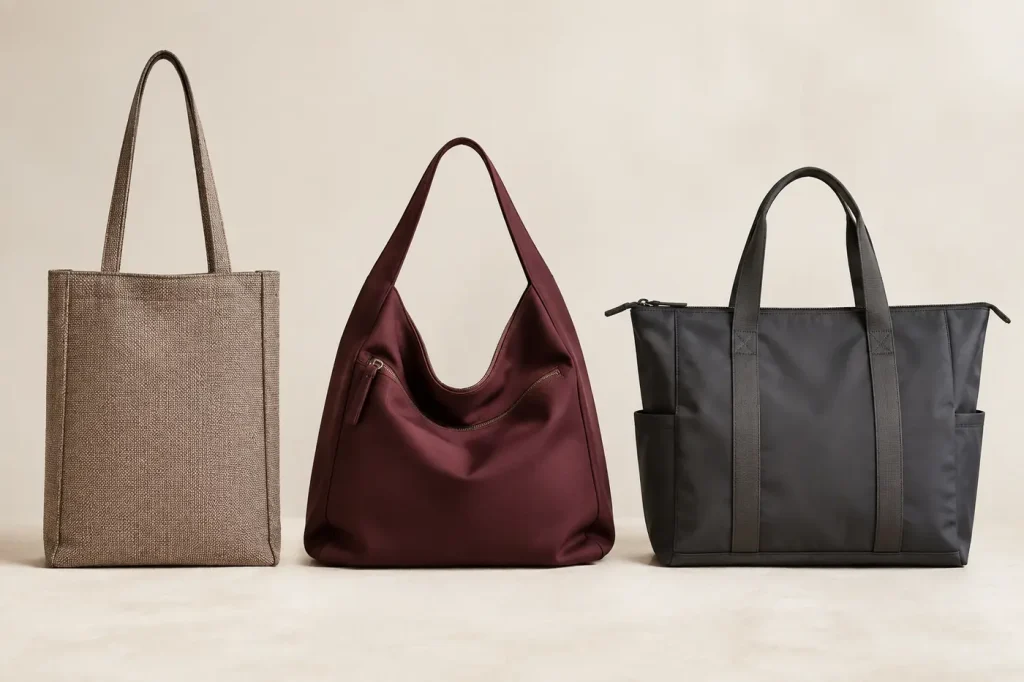
However, a flat tote is not automatically functional just because it photographs well. Designers still need to consider:
- whether the opening is wide enough for the intended use;
- whether the base needs a small gusset to prevent awkward bulging;
- how much weight the handles can support;
- whether the body collapses attractively or simply looks creased;
- whether an internal pocket changes the exterior silhouette;
- and whether the selected fabric needs backing, lamination or reinforcement.
That is where trend inspiration becomes product development.
Soft Structure Is Doing More Than Looking Relaxed
Soft shoulder bags and slouchy carryalls are also gaining attention. Their appeal is partly visual: folds, drape and a slightly lived-in shape feel less formal than a rigid handbag. But softness also changes the wearing experience.
A softer body can sit closer to the hip or under the arm. It can adapt to different contents, feel less restrictive and make a large bag appear less imposing. For a customer who wants capacity but dislikes the appearance of a traditional work tote, that combination can be persuasive.
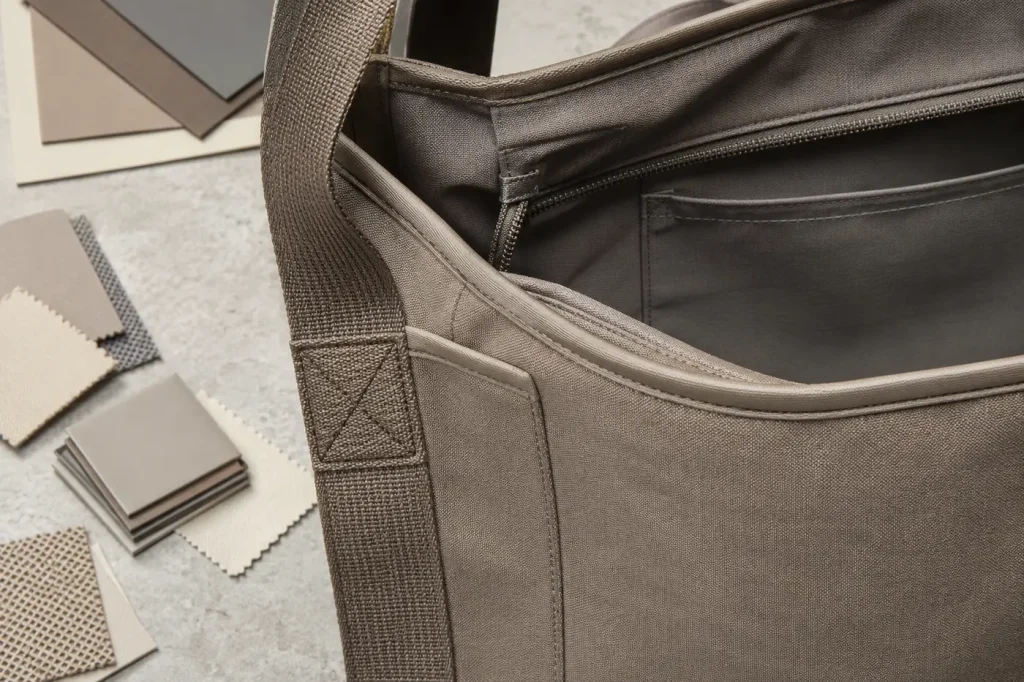
Softness, however, is not the same as “remove all structure and hope for the best.” A successful soft bag may still require controlled reinforcement around the opening, handle attachments, zipper ends or base. The goal is intentional drape—not accidental collapse.
For development teams, useful sample questions include:
- Does the empty bag retain enough character for product photography?
- Does it deform when loaded with typical daily items?
- Do the shoulder straps remain comfortable when the bag is full?
- Does the lining pull against the outer material?
- Are the handle attachments reinforced without becoming visibly stiff?
These details rarely appear in a glamorous trend headline, but they often determine whether a design becomes a repeat order.
Texture Is Replacing Noise
Another recurring signal in Fall 2026 coverage is texture. Velvet, satin, suede-like surfaces, technical nylon, woven constructions, visible grain, quilting and decorative finishes are giving simple shapes more personality.
This is useful for brands because a familiar tote or shoulder-bag pattern can feel new when the material changes. A flat silhouette in smooth nylon communicates something very different from the same basic shape in a soft woven textile or rich velvet-like fabric.
It also creates an opportunity for non-leather collections. A premium appearance does not have to depend on genuine leather alone; textile choice, surface treatment, lining, edge finishing, hardware and color coordination all influence the final impression.
But materials should be evaluated as components, not adjectives. “Soft,” “luxurious” and “durable” are marketing words until a sample has been handled and tested. Before confirming a material, buyers should review its recovery after folding, abrasion behavior, color consistency, weight, seam performance and compatibility with reinforcement.
A Quick Reality Check for Buyers and Designers
If a trend report says “oversized,” it does not tell a factory what to make.
A development brief still needs measurable decisions:
| Development question | Why it matters |
|---|---|
| What must the bag carry? | Determines dimensions, opening and reinforcement |
| How should it sit on the body? | Affects strap length, width and attachment position |
| Should it stand or collapse when empty? | Determines material backing and base structure |
| Is the priority low weight or strong shape? | Influences material and construction choices |
| Is the bag open, zipped or flap-covered? | Changes usability, security and cost |
| Which details create the collection identity? | Helps avoid producing a generic trend copy |
The last question is especially important. A trend should be a starting point, not a photocopier.
A brand can interpret the same large, soft silhouette through its own proportions, strap treatment, pocket layout, color palette, hardware or surface technique. That is how a market direction becomes a recognizable product instead of another bag that disappears into a search-results page.
What Yiwu Adds to This Conversation
XAOBAG is based in Yiwu, a city often called the “world’s supermarket.” According to Chinese government information, Yiwu hosts the world’s largest wholesale market for small commodities, with trade connections spanning more than 230 countries and regions.
That does not mean every product trend begins in Yiwu—or that every viral idea deserves to become a product. It does mean the city offers a useful view of how quickly global attention can turn into practical sourcing questions: What material? What size? What price position? What can be customized? How soon should a brand test the idea?
The sensible response to a trend is not to chase every viral bag. It is to identify the part of the trend that matches a brand’s customer, then test it through a clear sample brief.
Flat Tote, Soft Carryall or Structured Oversized Bag?
There is no single winner for every collection.
- Flat totes suit minimalist concepts, lightweight daily use and designs where surface texture or graphics matter.
- Soft carryalls suit casual collections, flexible capacity and a relaxed shoulder-carrying experience.
- Structured oversized totes suit work and commuter positioning, especially when organization and device storage matter.
- Slouchy shoulder bags suit younger, fashion-led collections that prioritize comfort and a close-to-body silhouette.
The best direction depends on the target customer, selling price, material choice and intended use—not simply which runway image received the most likes.
The Takeaway
Fall 2026 bags are getting bigger, but the more meaningful shift is how that size is being controlled. Flatter profiles reduce visual bulk. Softer construction makes large silhouettes easier to wear. Richer surfaces give simple shapes a stronger identity.
For shoppers, this may be the season when a fashionable bag finally carries more than a phone and optimism.
For brands, it is an opportunity to translate a visible trend into a practical product—but only after testing proportion, weight, material behavior, strap construction and internal organization.
XAOBAG works with brands on non-leather fashion bag development and OEM/ODM production. If you are planning a tote, shoulder bag or carryall collection, contact us to discuss the intended shape, dimensions, materials, colors, logo application and other customization requirements.