

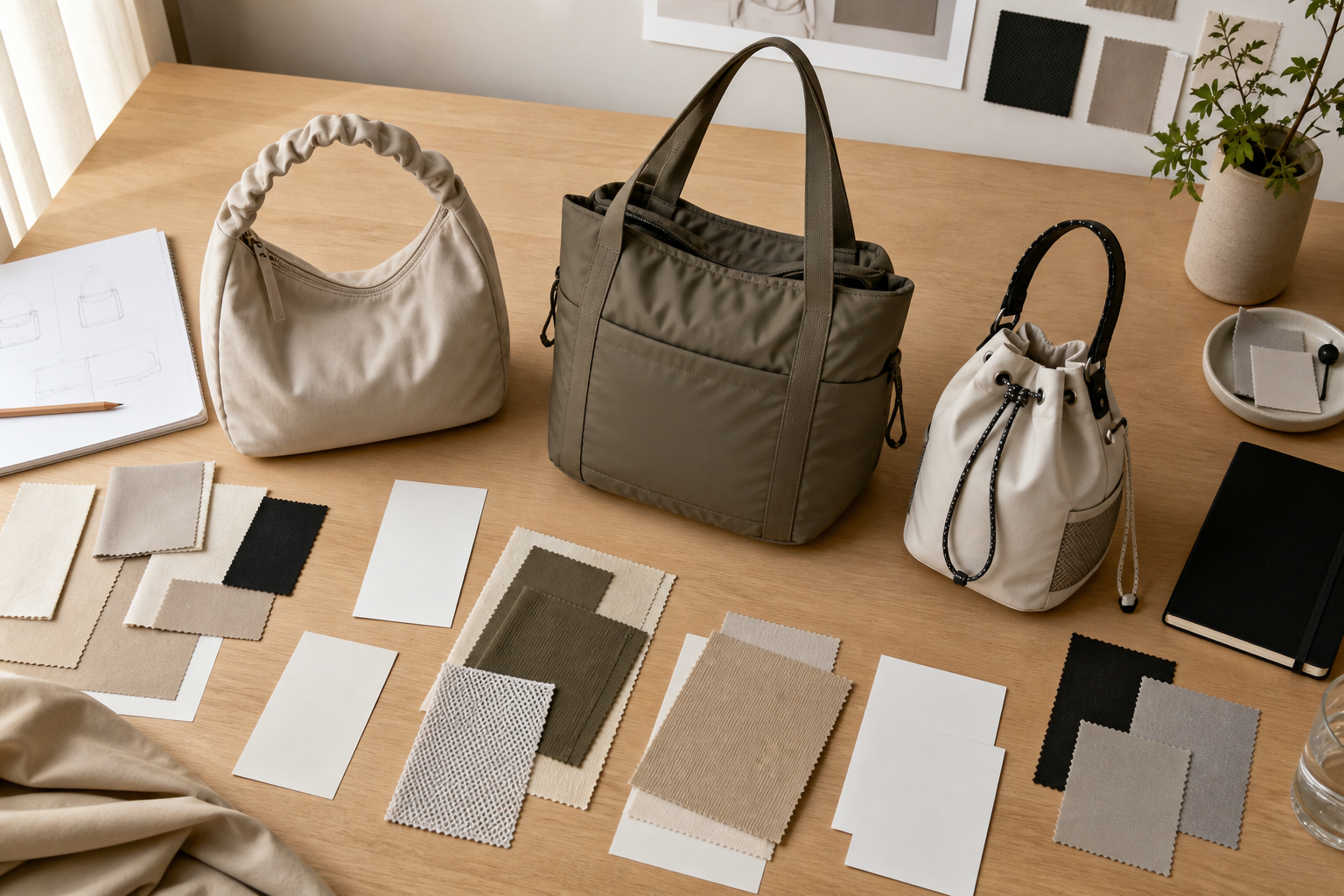
There is no responsible universal answer. A founder with one tightly defined customer, one price band and a limited sample budget faces a different decision from an established retailer testing a new category. The useful question is not “What number looks like a collection?” It is “What is the smallest set of products that can express the brand and teach us something different?”
A first collection should create focus, not the appearance of scale. Every additional structure introduces more pattern, material, hardware, sample and approval decisions. Color changes can widen the offer without necessarily creating a new bag structure. That distinction is where a manageable development plan begins.
Start with product roles, not a magic number
Write down the job of every proposed bag. A core style carries the clearest expression of the brand and the most important customer use case. A supporting style solves a genuinely different occasion, capacity or carrying need. An experimental style tests a less certain silhouette, feature or price position.
If two concepts serve the same customer, occasion and price band, ask whether both deserve separate pattern and sample work. They may be visual alternatives competing for one role rather than two necessary products. Keeping both on a mood board costs little; developing both physically can consume attention that the core style needs.
This is an editorial planning framework, not a claim that every collection must contain three products. A brand can have more or fewer roles. What matters is that each role is explicit.
Separate a new style from a variant
A new color does not automatically create a new handbag style. Neither does a different hardware finish. If the pattern, dimensions, construction, carrying method and main function remain the same, the change may be a variant of one development.
A new silhouette usually creates a larger decision load. Changing a tote into a crescent shoulder bag affects pattern geometry, opening, strap position, reinforcement, lining behavior and how the material holds shape. Those are not cosmetic changes. They require their own sample questions.
Use a simple test: would the sample maker need a meaningfully different pattern or construction route? Would the buyer learn something different about customer use or price acceptance? If both answers are no, treat the idea as a possible variant until evidence supports a separate style.
Give one style the hero position
The hero style is not automatically the most decorative bag. It is the product that most clearly connects target customer, use case, brand point of view and realistic price position. It deserves the clearest brief and the most careful sample review.
Supporting styles should make the collection easier to understand. A compact crossbody might support a work tote by serving a lighter-use occasion. A second tote that differs only slightly in width may make the range harder to read while doubling development decisions.
An experimental style needs a stated learning goal: perhaps testing a softer silhouette, a new carrying method or a less familiar material direction. Without that goal, “experimental” can become a label for an idea that has not been commercially thought through.
Count the sample decisions behind the line-up
The cost of a broad collection is not only the number of physical samples. Count the decisions each design creates: outer material, backing, lining, hardware, handle or strap attachment, logo method, edge finish, internal organization, packaging and quality checkpoints. A new version must record which of these changed and which stayed locked.
Shared materials and hardware can reduce unnecessary variation, but only when they suit each bag. A stiff material chosen for a structured tote may fight the drape required by a soft shoulder bag. One buckle can visually connect a collection, yet its scale and attachment still need to work with the load and strap width of each product.
Before requesting samples, create a development-load sheet. Mark the unique pattern, material system, hardware set and open decisions for every proposed style. The page will reveal whether five sketches are truly five products—or several versions of the same unresolved idea.
Use a keep, merge or defer review
Keep a style when it has a distinct customer job, a clear place in the price architecture and a sample that will answer an important question. Merge two ideas when they compete for the same role and their strongest features can be evaluated in one direction. Defer a style when its customer, structure or price purpose is still vague.
Deferring is not deleting. It protects the idea from being judged through a rushed sample. A deferred concept can return after the first products clarify which material, price and use assumptions were correct.
This review also protects originality. Reference images may communicate direction, but the final brief should identify the brand's own customer, proportions, functions and construction decisions rather than requesting a recognizable product with superficial changes.
What the manufacturer needs after scope is chosen
Once the line-up is focused, send a prioritized list rather than a folder of equally urgent inspiration. For each style, state the target customer, use case, approximate dimensions, intended price band, material direction, carrying method, quantity scenario and unresolved questions. Record which colors are variants and which concepts require separate construction.
The manufacturer can then respond to a defined product decision instead of guessing which idea matters most. XAOBAG-specific development scope, commercial terms and accepted file formats still require human confirmation; this article does not promise a free collection-planning service.
A focused collection creates better questions
The first collection does not need to prove that the brand can design everything. It needs to make the proposition understandable and make each sample worth reviewing. Start with product roles, distinguish structures from variants, give one style priority and let every additional sample earn its place through a different learning goal.
If you already have a focused shortlist, send the target customer, use case, price band, reference direction and open decisions. XAOBAG can then confirm what product information is needed before a sampling discussion.
Sources
- Google Search Central — Creating helpful, reliable, people-first content (accessed 2026-09-01)
- FRAYDA — Custom Bag Development (accessed 2026-09-01)
- ISUNDEI — Custom Bag Development Process (accessed 2026-09-01)