

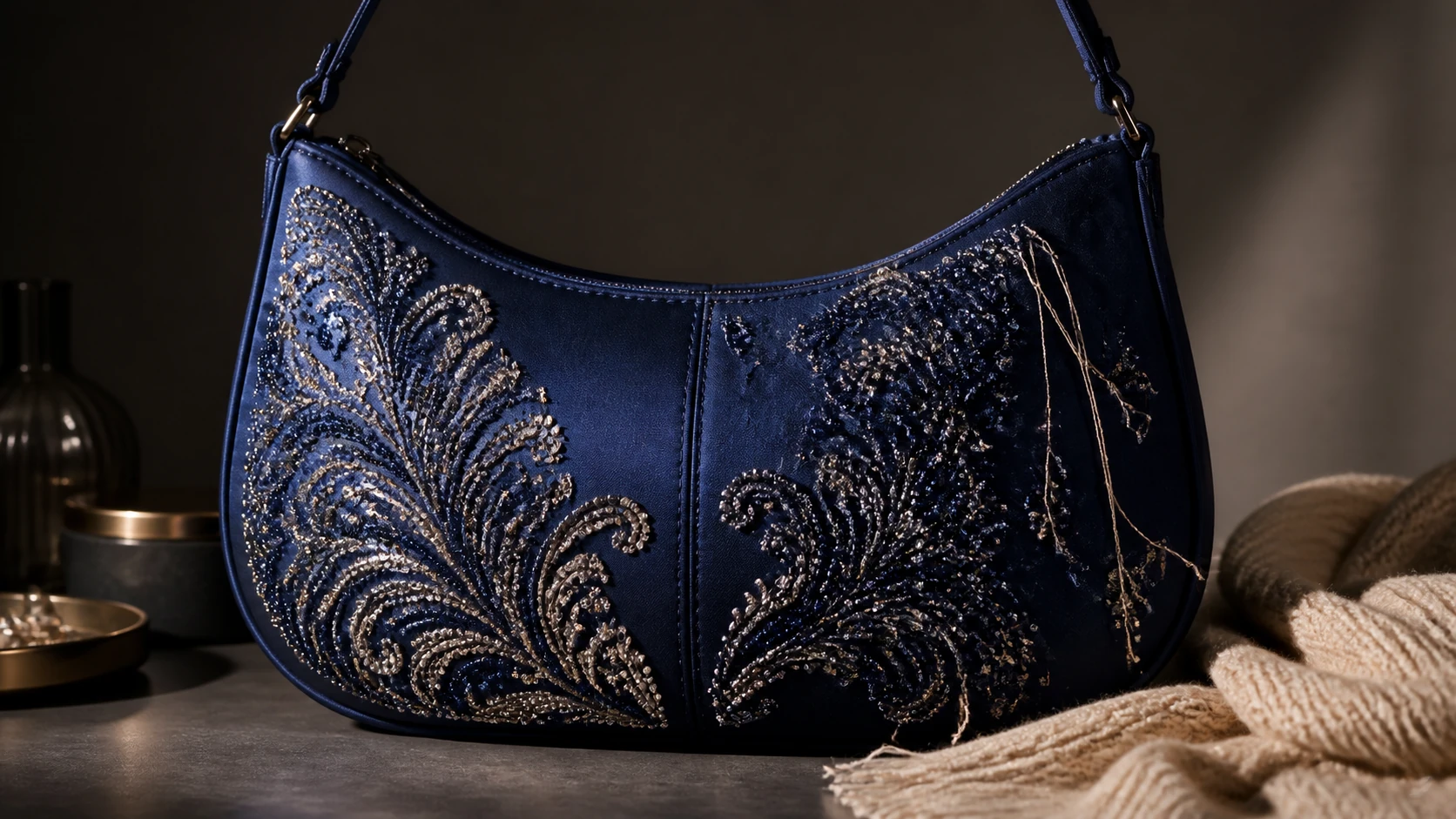
Embellished handbags are built for the first glance: beads catch the light, sequins animate every step, and fringe turns a small bag into the loudest part of an outfit. The conflict begins after the photograph. Decoration sits exactly where sleeves, knitwear, tables, zippers, and hands can test it. A beautiful bag does not need to be indestructible—but it should be honest about the life it can handle.
The trend is visual; the decision is physical
Vogue’s 2026 coverage places beaded, sequined, fringed, and netted bags across the season’s expressive handbag direction. That establishes a visible trend, not a durability verdict. Two bags can sparkle equally in a picture while behaving very differently when carried.
The useful distinction is contact. Decoration on an outward-facing front panel mostly meets air and light. The same beads on the back of a shoulder bag may rub against a coat. Long fringe near a zipper can become part of the closure whether the designer intended it or not.
That is why “more decoration” is not automatically more special. Often, a concentrated motif on a protected zone looks more deliberate—and survives daily handling better—than an all-over surface fighting every touch point.
Try this five-point wearability scan
Before buying an embellished bag, take ten seconds to inspect five things:
- Snag zones: Look for loose thread loops, lifted sequin edges, or fringe crossing the opening.
- Body contact: Check the back panel, strap underside, top edge, and swinging corners.
- Closure clearance: Open and close the bag slowly. Decoration should stay clear of zippers, snaps, and drawstrings.
- Empty weight: Lift it before adding a phone, keys, or cosmetics. Dense glass beads and metal details can change the balance.
- Inside protection: A lining should keep belongings away from attachment threads without pulling the outer shell out of shape.
This is a screening framework, not a laboratory test. It cannot predict a product’s lifespan, but it quickly separates visible warning signs from decoration that has been placed with daily handling in mind.
For a related example of movement concentrated at one attachment point, compare the structure of functional bag charms with decoration sewn across a flexible bag body.
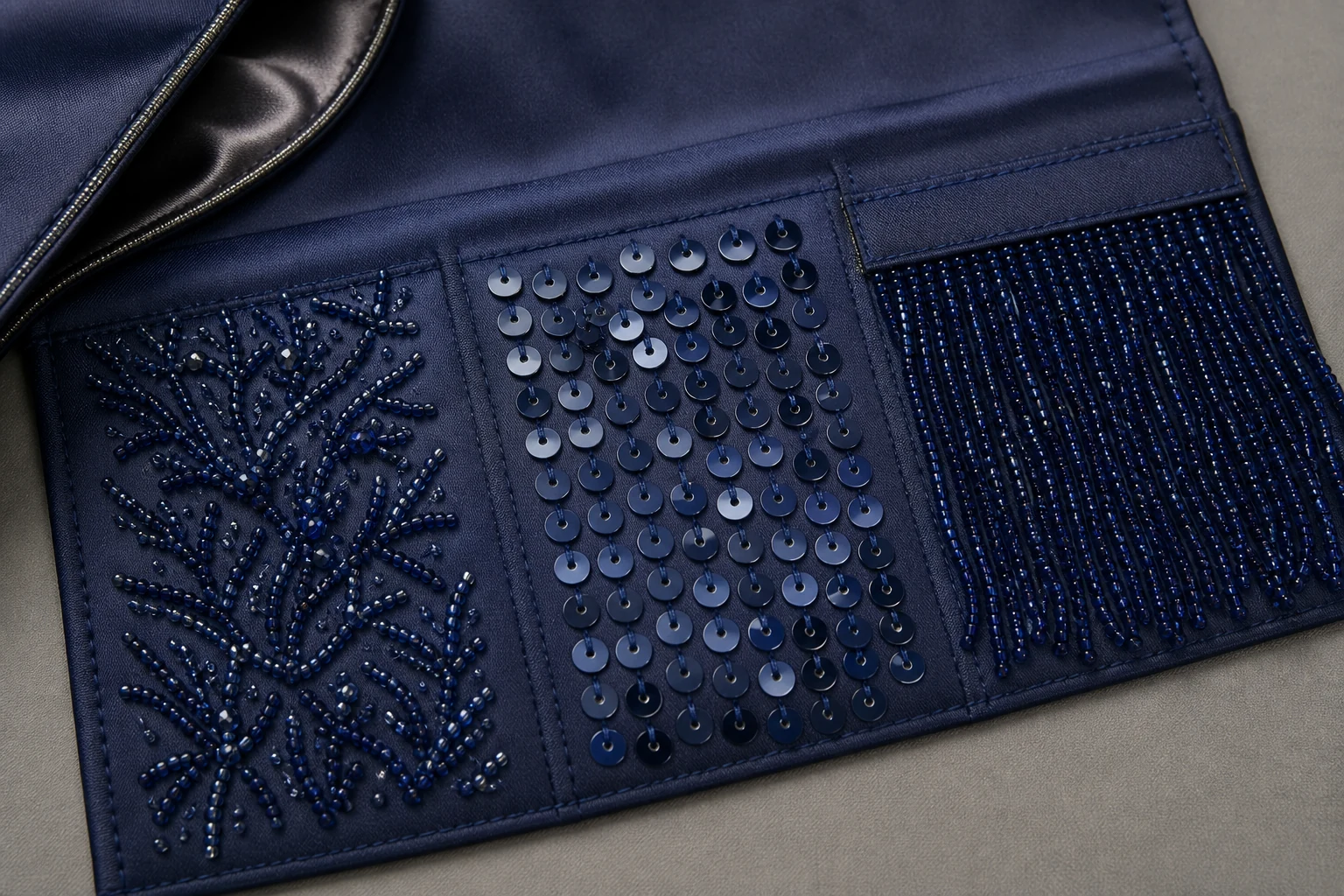
The best version knows when to stop
An evening pouch can reasonably be delicate. A daily shoulder bag has a different job. The mistake is not fragility itself; it is a mismatch between the visual promise and the intended use.
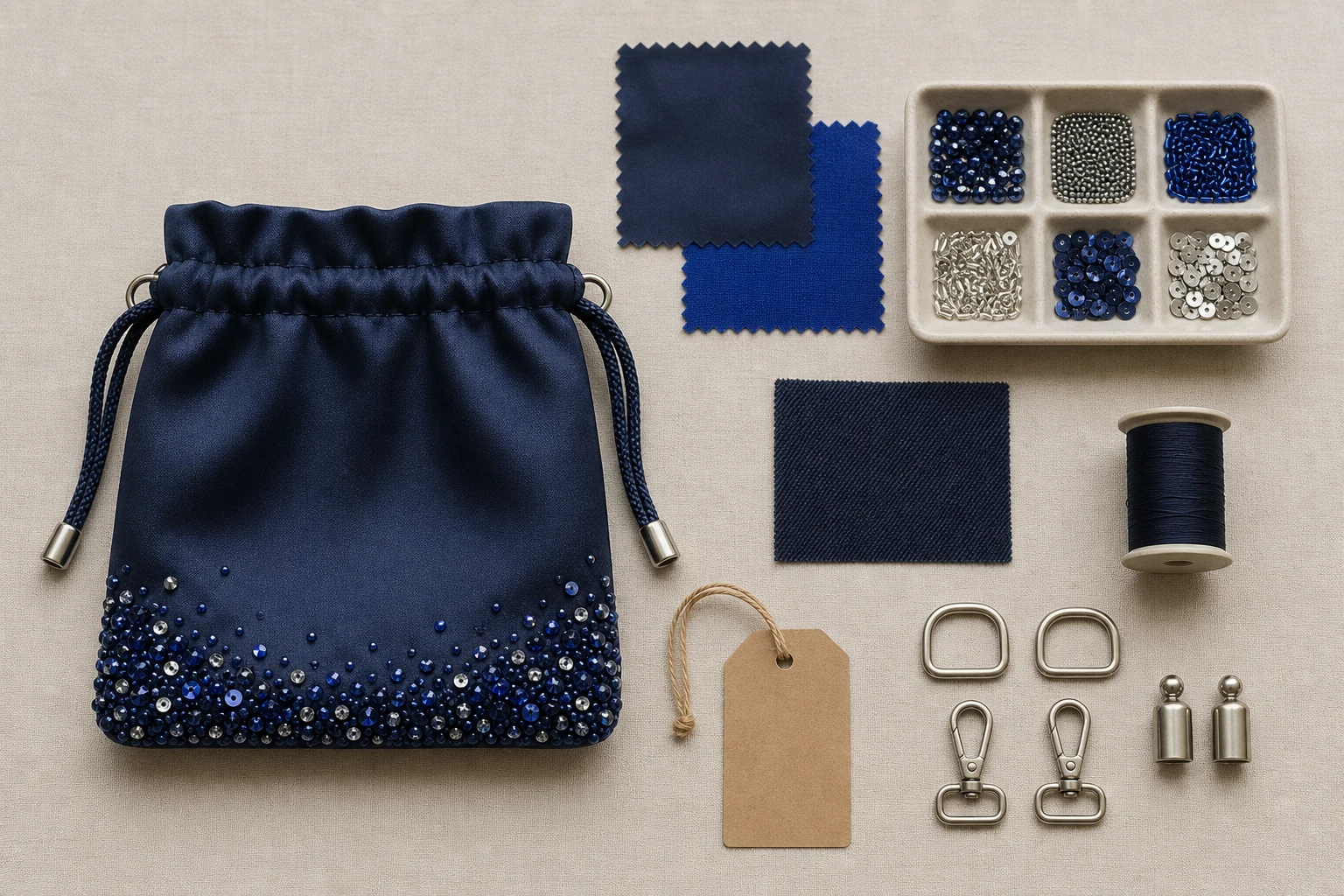
For consumers, the smartest choice may be a smooth-backed bag with embellishment on the flap or front panel. For product developers, the same idea becomes a decoration map: identify the hero zone, protect contact areas, give the closure clearance, and review the finished sample while it is filled and carried—not only while it lies flat.
That sample review should use the actual materials and intended construction. Care language, performance expectations, and any formal test plan still require confirmation for the specific product and market; they should never be copied from a similar-looking bag.
The broader design lesson is restraint with purpose. Color, shine, texture, and silhouette do not all need to shout at once. If your brand is translating an expressive trend into a practical collection, XAOBAG’s OEM/ODM perspective and project contact route can help frame the questions for a design or tech-pack discussion—without pretending that a photograph has already solved production.
Sources
- The Summer 2026 Handbag Trends Defining the Season — Vogue, published June 10, 2026; accessed August 24, 2026.
- The 5 Handbag Trends to Note for 2026 — Who What Wear UK, accessed August 24, 2026.