

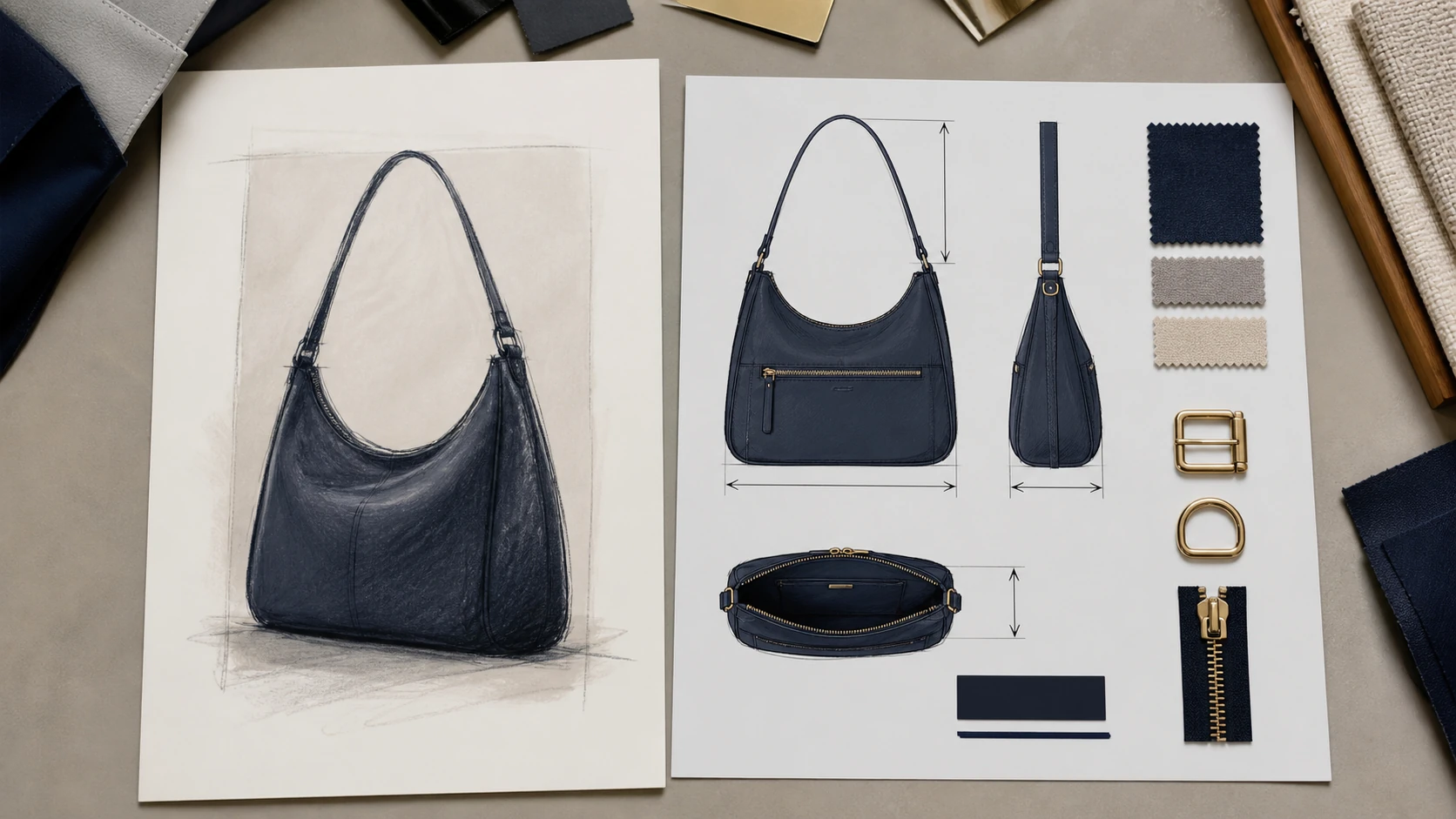
A first handbag sample can look wrong even when nobody made an obvious mistake. The curve feels timid, the pocket sits too low, or the hardware makes the whole design look cheaper than the reference. The uncomfortable possibility is that the sample is not disobeying the brief. It is completing decisions the brief never made.
That changes the useful question from “Why didn’t the factory understand?” to “Which choice did we leave open?” Before requesting a sample, lock five decisions that a beautiful sketch cannot settle.
A sketch shows intention; a sample needs instructions
Techpacker describes a handbag tech pack as a communication document containing technical sketches, construction details, measurements and a bill of materials. Shopify likewise treats technical drawings or tech packs as the road map shared with a manufacturing partner. Neither source says a document eliminates iteration. The practical point is narrower: a factory cannot reproduce a decision that exists only in the designer’s head.
The most expensive ambiguity is rarely “make a navy shoulder bag.” It is the relationship between parts. A 24-centimeter body can look balanced with one strap drop and awkward with another. A pocket may technically fit a phone but distort the front panel. Two gold finishes can push the same silhouette toward quiet or flashy.
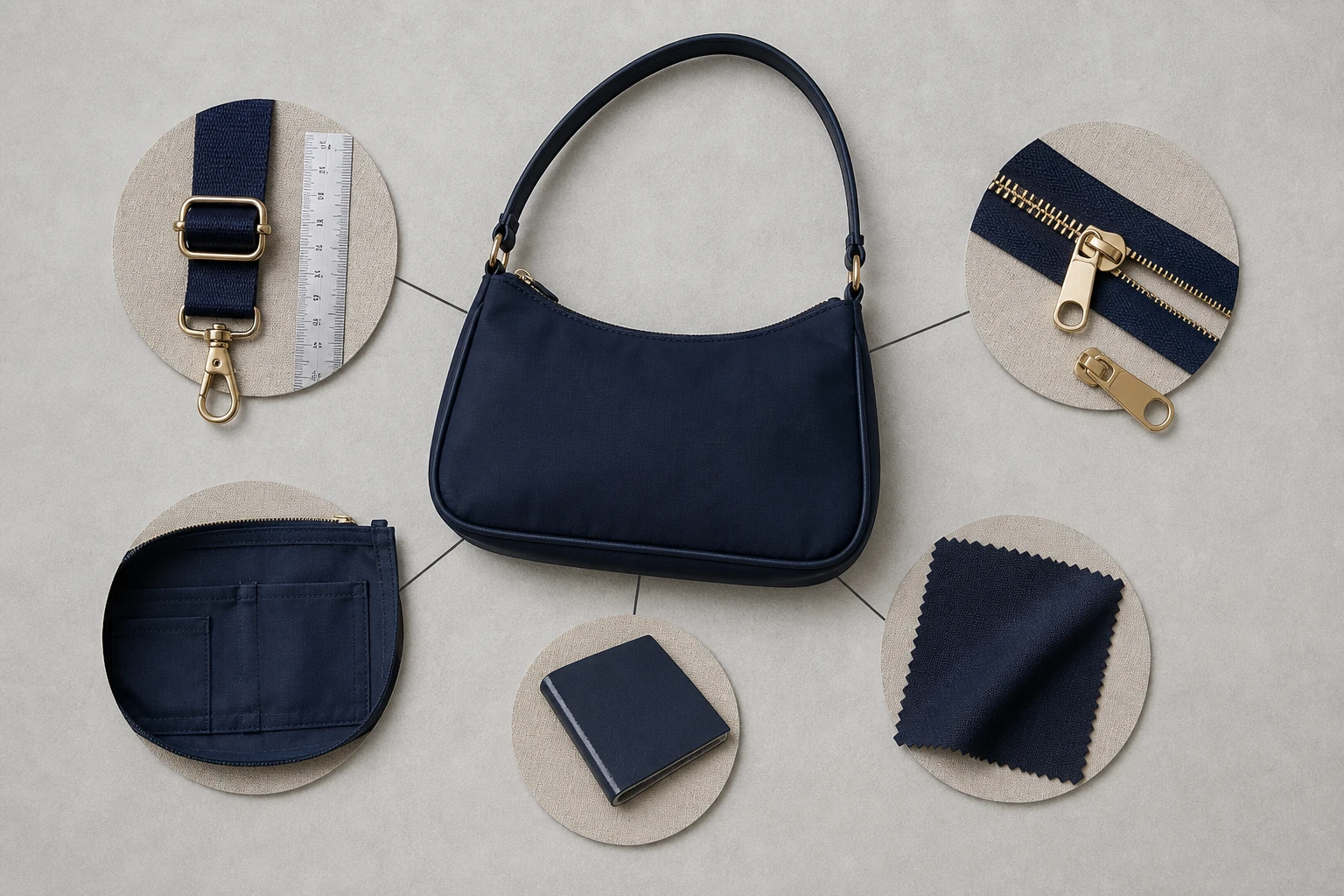
Lock these five choices before sample one
Use this as a brief check, not a universal technical standard:
- Silhouette under load. Specify whether the bag should hold its outline when filled or collapse softly. Add a side view and intended gusset depth.
- Strap relationship. Record strap drop, width, adjustment range and attachment position—not merely “shoulder strap.”
- Opening behavior. Show zipper direction, usable opening length and what must pass through it. A wide body with a short opening is a classic paper victory.
- Pocket purpose. Name the object, position and access direction. “Inside pocket” leaves size, closure and placement unresolved.
- Material and hardware references. Identify the intended hand feel, surface, lining, edge treatment and finish family. A color name is not a finish specification.
These choices create tradeoffs. More structure may protect the silhouette but change hand feel and construction. A deeper gusset adds capacity but changes the profile. A heavier puller may feel substantial in the hand yet drag on a soft zipper panel. The brief should expose those decisions, not hide them behind adjectives such as “premium.”
Review the sample against decisions, not mood
When sample one arrives, avoid a comment sheet filled with “make it nicer” or “shape feels off.” Photograph the same views used in the brief. Then write each correction as three parts: what you observe, what the intended result is, and which specification changes.
For example: “The filled side profile bows outward by the base. We want the front to remain visually flat when carrying a phone and wallet. Please review gusset depth and reinforcement options before the next sample.” The manufacturing solution still requires discussion, but the design decision is now testable.
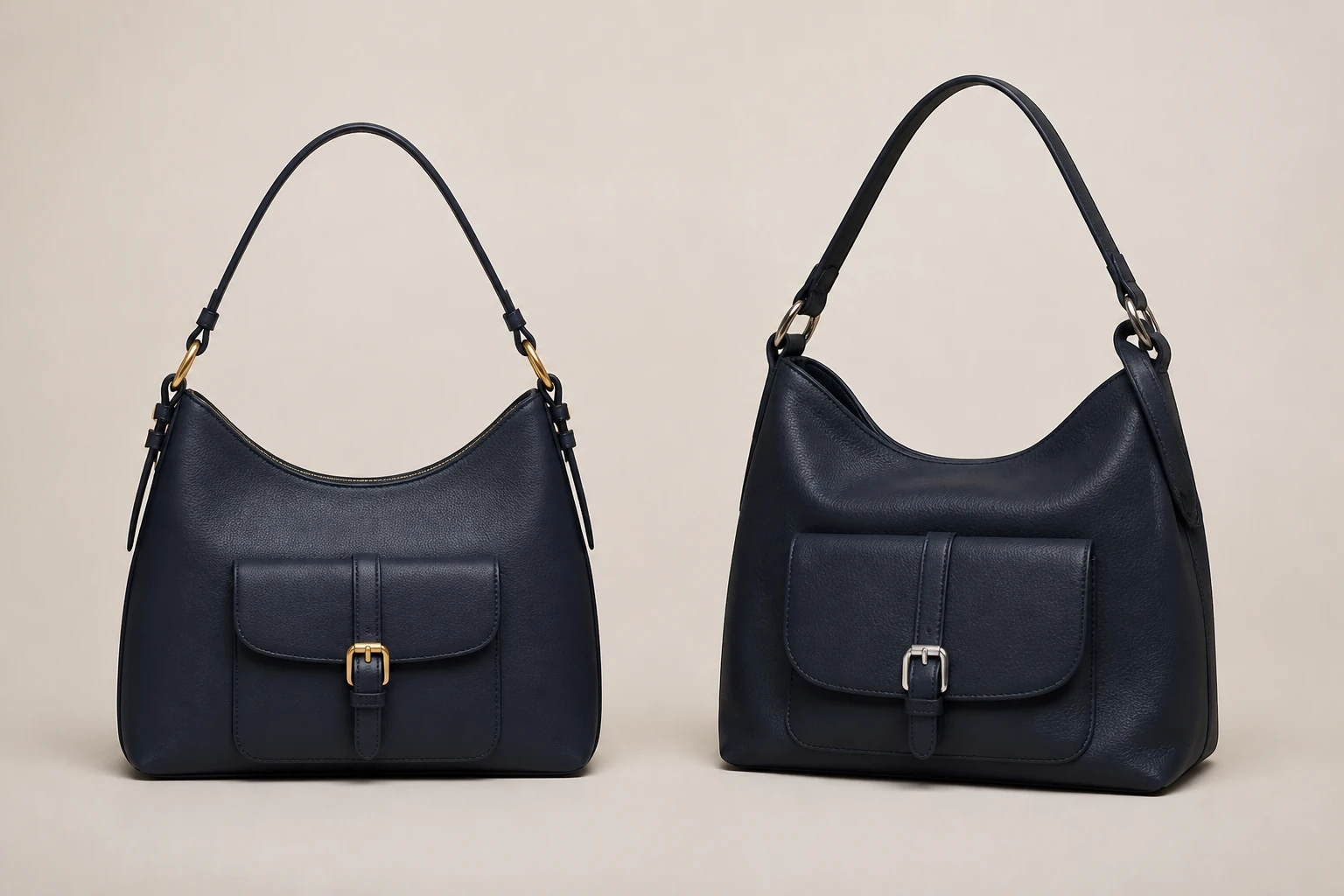
This also separates verified facts from project choices. The components commonly included in a tech pack are publicly documented. The correct reinforcement, tolerance, material, test plan, costing and production method for a specific XAOBAG project still require the actual design and intended market.
Send the uncertainty, not just the artwork
If one part of the design is unresolved, say so. A useful brief can label “decision needed” beside a pocket, closure or material option. That is better than accidental certainty.
Before a sampling discussion, send the front, back, side and top views; key measurements; intended carry objects; material or finish references; and the three details you are least willing to compromise. XAOBAG can then discuss those specific design and manufacturability questions against the proposed bag, rather than pretending a reference image is already a production instruction. See our OEM/ODM overview or send the design brief for a focused discussion.
Sources
- How to Create a Tech Pack for a Handbag — Techpacker (accessed August 24, 2026).
- How To Get Started With Product Manufacturing — Shopify (accessed August 24, 2026).