

A trend can tell a buyer that a silhouette, color or styling detail is becoming visible. It cannot tell the buyer which customer will carry it, what price position can support it, whether the material will hold the intended shape or whether the idea belongs in the brand’s assortment.
That gap matters. A runway image or fast-moving social post is an observation source, not a production brief. Before sampling, the signal must pass through customer, use, price, material, structure and collection-role decisions. Otherwise the factory receives an attractive reference with no commercial definition.
Name the customer before naming the trend
“Soft bags are trending” is too broad to guide development. A soft bag for a commuter carrying a laptop has a different opening, support and strap requirement from a small evening shoulder bag. The same visual signal produces different products when the customer and occasion change.
Write one customer sentence: who is carrying the bag, where, what must fit, how long it is carried and what frustration the product should avoid. If the team cannot agree on that sentence, material and construction discussions are premature.
This step also filters irrelevant traffic. A high-fashion editorial trend may generate attention while remaining unsuitable for the target retailer, region or price band. Visibility is not proof of sales.
Put the trend inside a price position
Price is not something to add after the sample looks right. It changes which material finish, hardware complexity, lining, internal organization and packaging can be considered. A visually simple bag can still become costly if it depends on custom hardware, difficult edge work or a structure that requires more components and handling.
The buyer should define a target retail position and an acceptable product-cost discussion range before requesting detailed development. That range is not a request to cut every visible feature. It is a boundary for deciding which part of the trend creates customer value and which part is decorative expense.
Do not copy price claims from another manufacturer’s website. XAOBAG prices, minimums and commercial terms are project-specific and require a real quotation.
Test the silhouette against its material
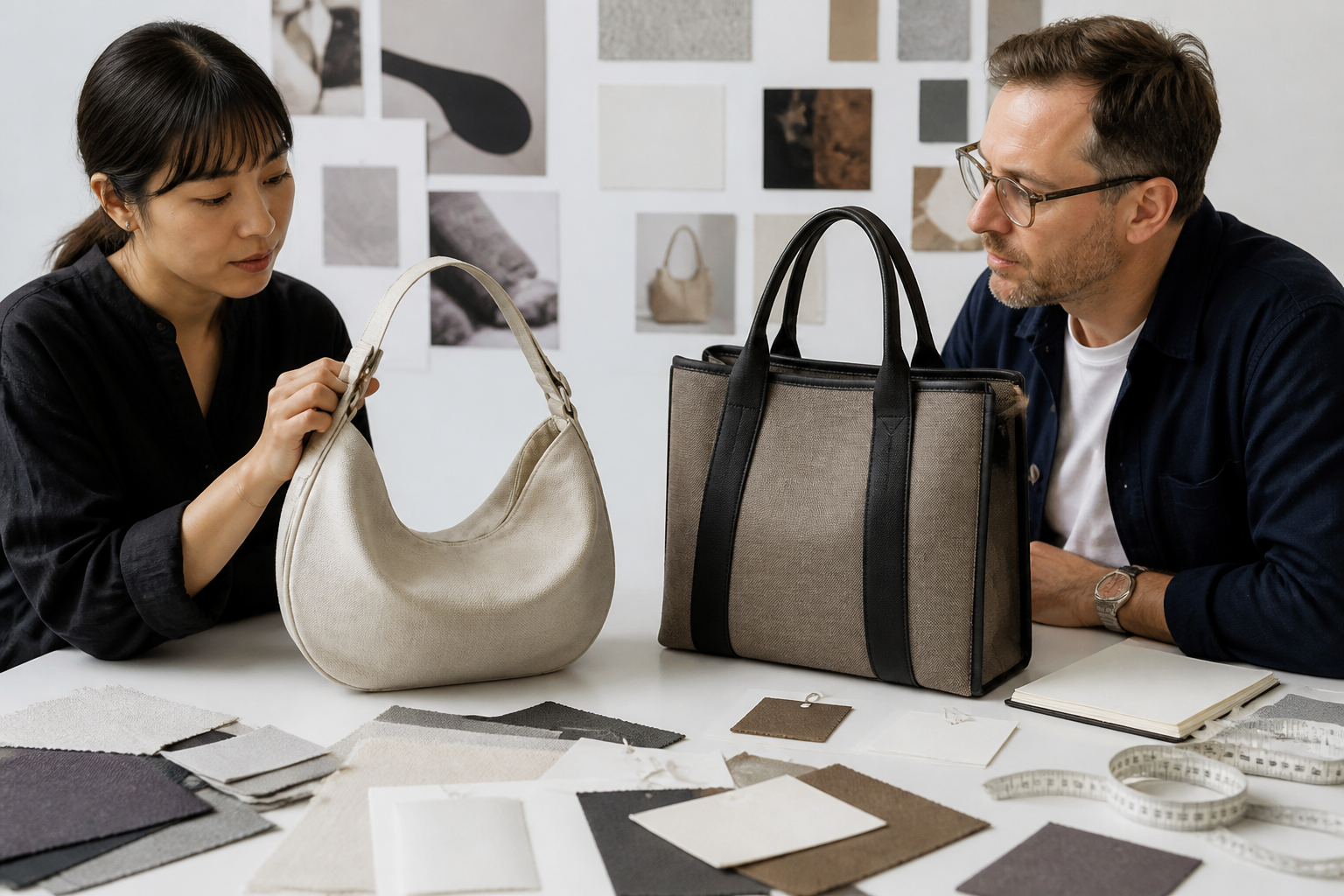
The same outline can behave very differently in soft textile, coated material or a reinforced construction. A slouchy crescent needs controlled drape; too much backing can make it stiff, while too little support can distort the opening or strap attachment. A structured tote needs panels, seams and reinforcement that keep the intended geometry during use.
Ask what creates the shape: the outer material, backing, lining, piping, edge construction, panel geometry or an internal reinforcement. Then ask what the customer experiences when the bag is filled. A trend image usually cannot answer either question.
This is where a product developer adds value. The goal is not to make the factory reproduce a photograph. It is to define the behavior that made the photograph interesting and rebuild that behavior through an original product direction.
Check the use case, not only the front view
An open-top bag may look relaxed in an editorial image but expose a security or spill concern in daily use. An oversized tote may photograph well while becoming uncomfortable when loaded. A compact east-west shape can feel fresh yet fail the customer’s phone, wallet or eyewear requirement.
Before sampling, review opening access, capacity, carrying comfort, base behavior, strap drop, closure, interior visibility and how the bag sits against the body. These are product questions, not reasons to reject a trend. They show where the attractive signal needs adjustment.
Create one use scenario and one stress scenario. The use scenario describes the normal carry. The stress scenario asks what happens when the bag is full, repeatedly opened or carried for longer than the styling image suggests.
Decide whether the signal can support a collection
One trend-led product does not automatically form a coherent range. Look for a design language that can travel across roles without cloning the same bag: a proportion, material story, hardware family, construction detail or color relationship.
Then identify the limits. If the signature depends on one large buckle, does it still work on a smaller supporting style? If the collection uses a soft silhouette, which product role genuinely needs more structure? A useful collection repeats a point of view while allowing each product to solve a different customer job.
Avoid taking one search phrase and producing separate thin pages for every color or bag type. Develop supporting articles only when the buyer decision and evidence are genuinely different.
Build a sampling filter
Score the idea qualitatively across six questions: Is the target customer clear? Is the price position credible? Does the material create the intended behavior? Is the structure usable? Does the concept add a distinct collection role? Can the sample answer an important commercial question?
A concept that fails one question may need refinement, not rejection. A concept that fails several is still inspiration. Labeling that distinction early protects the sample budget and gives the manufacturer a brief it can question.
Trend evidence also expires. Record the source and date, then separate what was observed from what the team inferred. No source can prove in advance that the final bag will sell.
Turn the signal into an accountable brief
The final brief should not say “make this trend.” It should state the customer, market, price position, use case, original design direction, dimensions, material behavior, structure, collection role and decisions the sample must test.
If your team has a trend reference but not yet a product plan, send the target customer, use case, price position and the feature you believe matters. XAOBAG can confirm what additional product information is needed for a development discussion; final capabilities and commercial terms require human review.
Sources
- Marie Claire — Spring 2026 Bag Trends (accessed 2026-09-01)
- Marie Claire UK — Mid-Priced Handbags and Minimal Aesthetics (accessed 2026-09-01)
- Google Search Central — Creating helpful, reliable, people-first content (accessed 2026-09-01)