

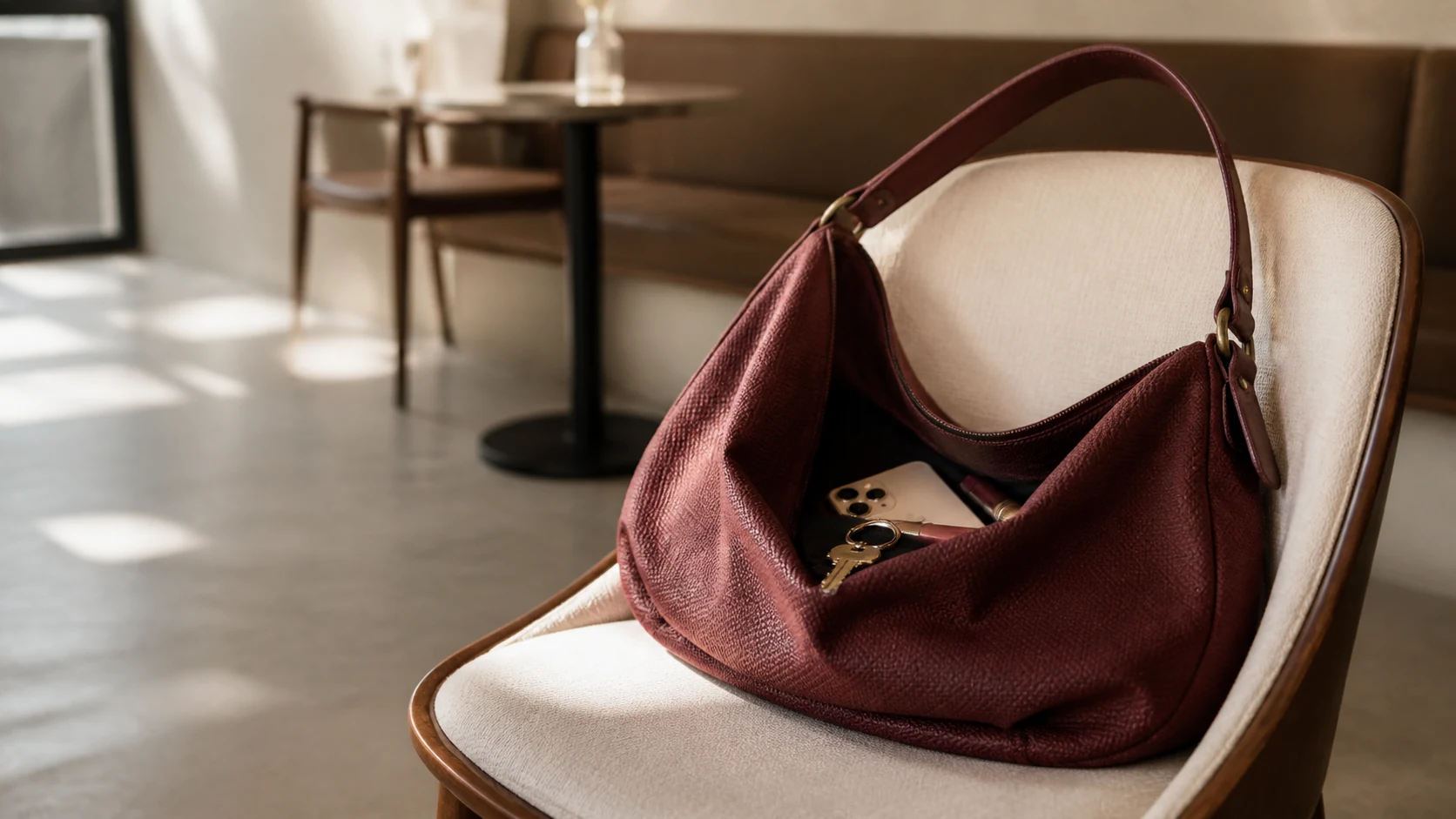
Fashion’s latest status move is to leave the bag visibly unfinished: zipper open, buckle loose, contents almost on display. British Vogue called it the “pickpocket bag”; Who What Wear described 2026’s deliberately unbuckled, lived-in look. It photographs like effortless confidence.
Then the bag tips over.
The open-bag trend is real as an editorial direction, but “open” is a styling effect—not a useful product specification. The smartest versions preserve that relaxed silhouette while quietly deciding what must stay inside.
The fantasy is mess; the design still needs control
Runway and street-style coverage from British Vogue, Who What Wear and Marie Claire UK all point to unzipped or unlatched bags as a visible 2026 theme. That does not prove every shopper wants one, or that the look will last. It does establish a design tension worth exploring: exposure reads casual in a photograph, while real users still carry phones, keys and earbuds.
Recent handbag discussions show the counterpoint. One highly engaged Reddit thread complained that current totes are “just sacks” without zips or compartments. Other 2026 posts ask specifically for work bags that close fully. These are qualitative signals, not market statistics—but they reveal the question behind the trend: can a bag look open without behaving careless?
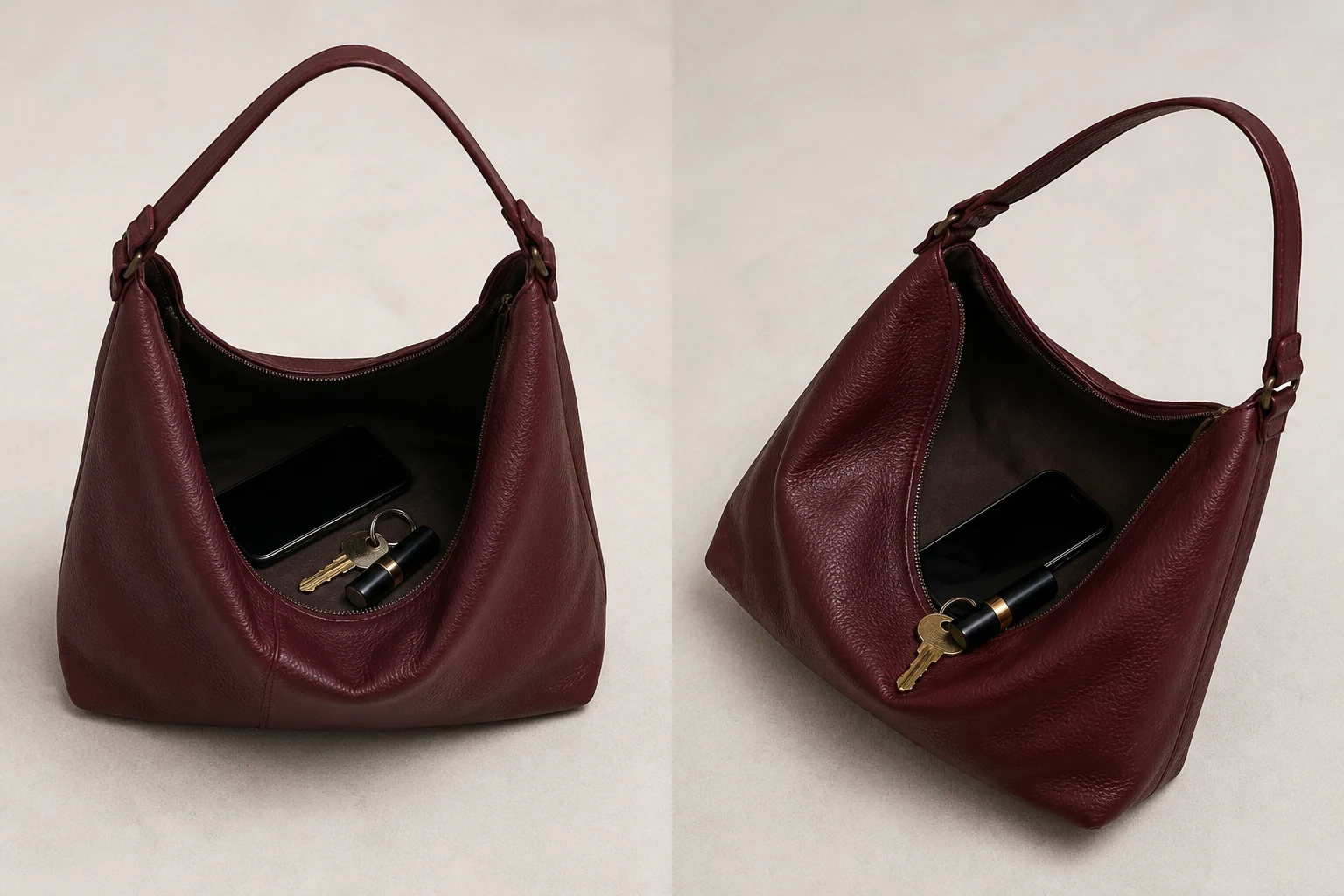
Three ways to fake the risk
The most interesting commercial translation is not “remove the closure.” It is to separate the visible gesture from the retention system.
- The hidden catch. Let a belt, flap or zipper appear relaxed while a concealed magnetic or secondary closure controls the main opening. The catch position matters: too low and the mouth still gapes; too high and the bag loses its slouch.
- The secure core. Keep the outer compartment open, but give valuables a zipped central section or removable pouch. This preserves quick access without making every object part of the styling.
- The shaped opening. Use gussets, inward folds or a narrowed top line so the bag can look unfastened yet resist spilling when it tilts. Shape does some of the work that hardware would normally do.
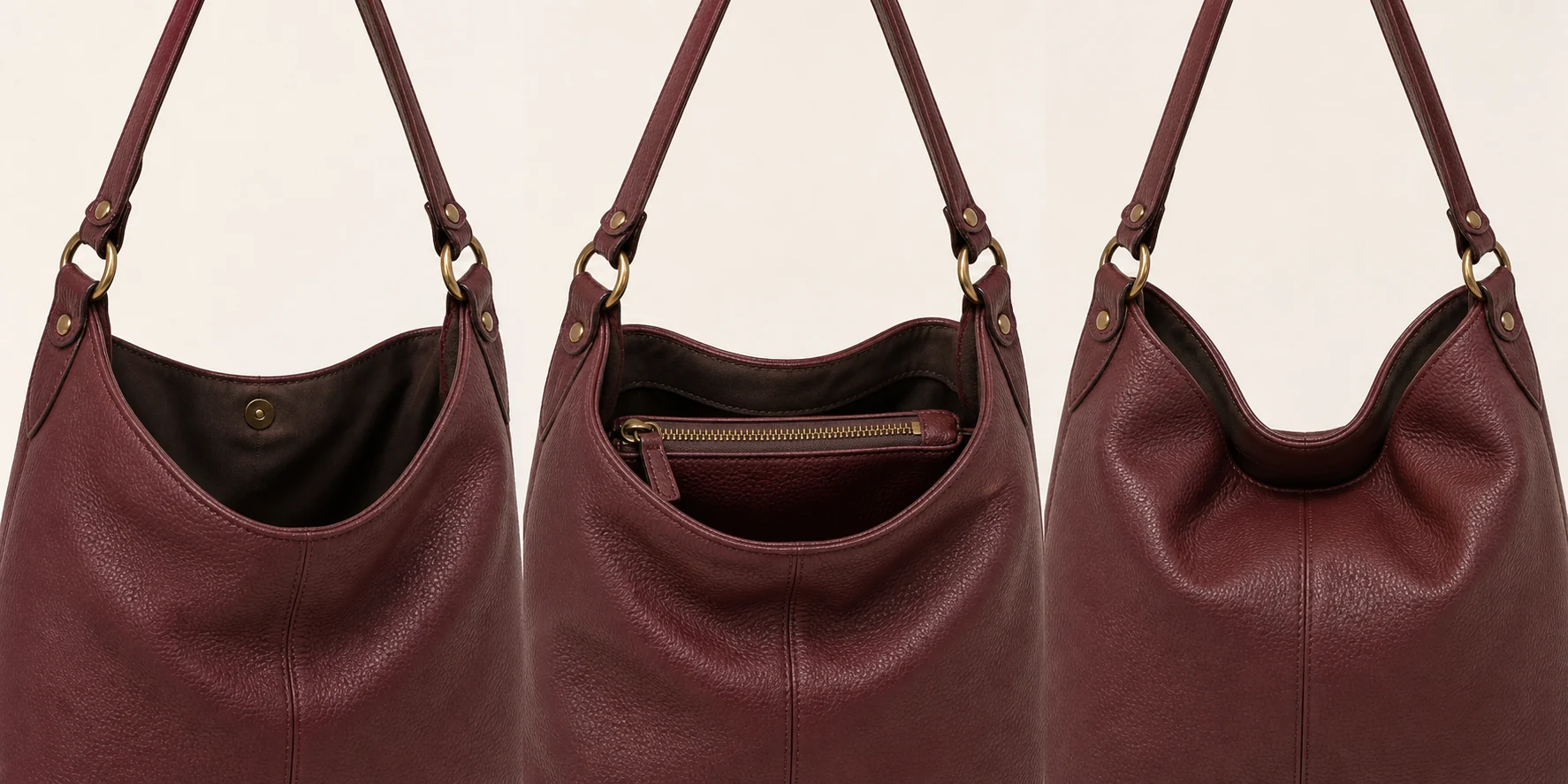
None is automatically better. A magnet may interrupt drape. A central compartment adds layers and weight. A narrowed opening can frustrate access. That is exactly why “undone” needs a real brief rather than a reference image and a shrug.
Try the five-second gravity check
Before approving the look, load the sample with the objects shown in the intended styling. Put it upright, carry it, set it down, then tilt it as it might move on a car seat or café chair. Watch three things: what becomes visible, what shifts toward the opening and what actually escapes.
This is not a laboratory test or a universal pass criterion. It is a fast design review that exposes the difference between curated disorder and accidental spillage. If the bag only looks convincing when empty and perfectly upright, the photograph—not the product—may be doing all the work.
The useful question for a designer or buyer is simple: which part should look undone, and which part must remain controlled? That answer can guide the opening shape, internal architecture and closure choice before sampling.
For a development discussion, send the intended silhouette, carry objects and the exact view that should appear open to XAOBAG. You can also review our OEM/ODM context before preparing the brief.
Sources
- The Pickpocket Bag Is This Season’s Biggest Accessory Trend — British Vogue (accessed August 26, 2026).
- The Real Show of Status in 2026 Is Wearing Your Bag Unbuckled and Undone — Who What Wear (accessed August 26, 2026).
- The “Open Bag” Trend Is the Perfect Example of What the Ultra-Rich Want — Marie Claire UK (accessed August 26, 2026).
- What happened to tote bags with zips and compartments? — Reddit (consumer discussion signal only; accessed August 26, 2026).