

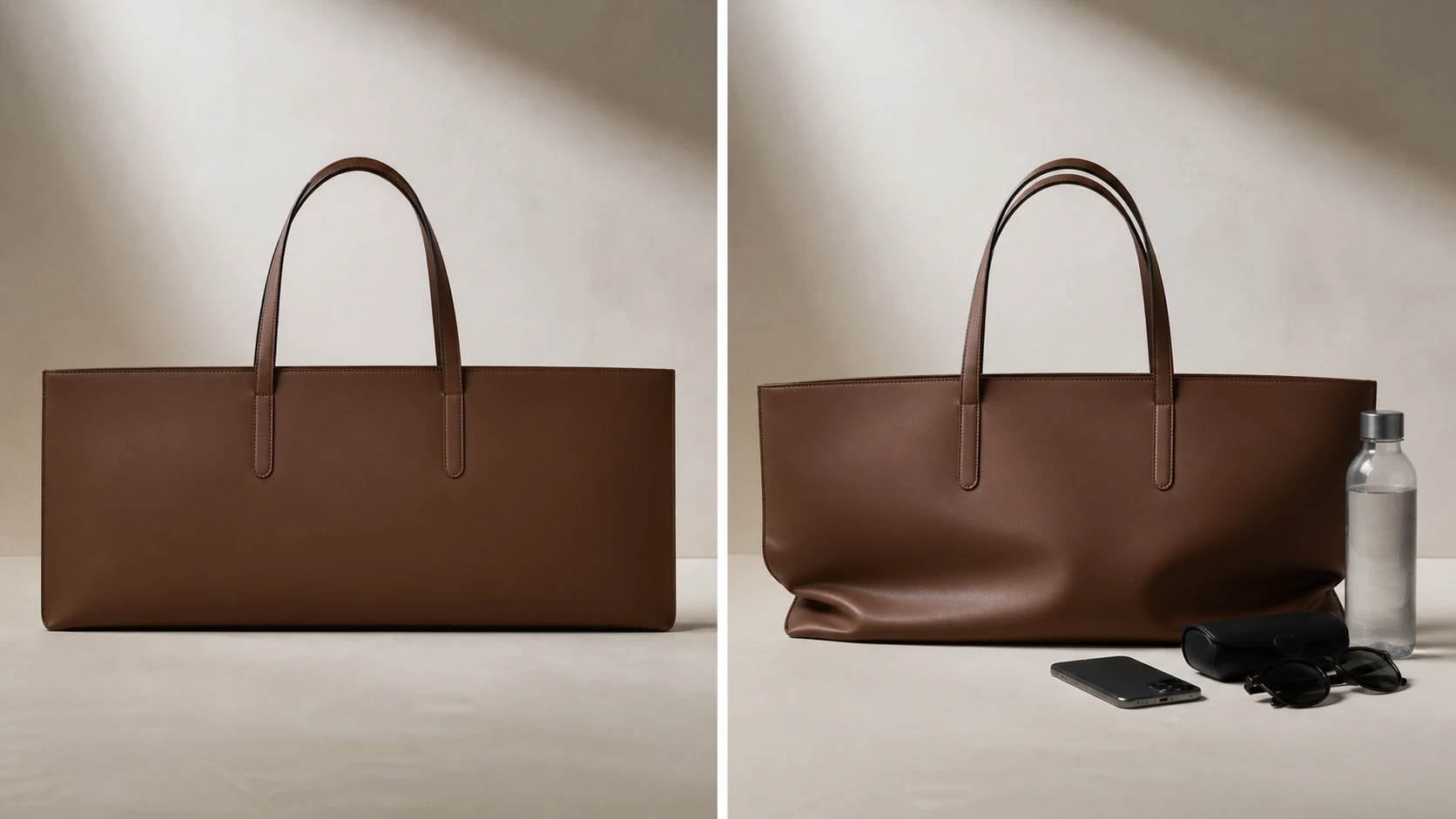
The flat tote has one terrific party trick: it makes empty space look expensive. The long horizontal line feels calm, graphic and deliberate. Then a sunglasses case enters the conversation.
This is not an argument against flat totes. It is a warning that their most attractive feature—the thin profile—is also the first thing ordinary objects can erase. Before buying one, do a thirty-second thickness test.
The trend is wide, but your belongings are three-dimensional
Who What Wear recently identified the flat tote as a major 2026 bag direction, while Vogue has tracked the related east-west silhouette: elongated proportions, thin straps and a polished horizontal line. Those articles establish the visual trend. They do not promise that every version will carry a working day.
A phone is flat. Keys are not. Sunglasses become surprisingly architectural inside a case. A small water bottle can turn a crisp rectangle into a soft hill. The bag may still function, but it stops delivering the exact silhouette that made you want it.
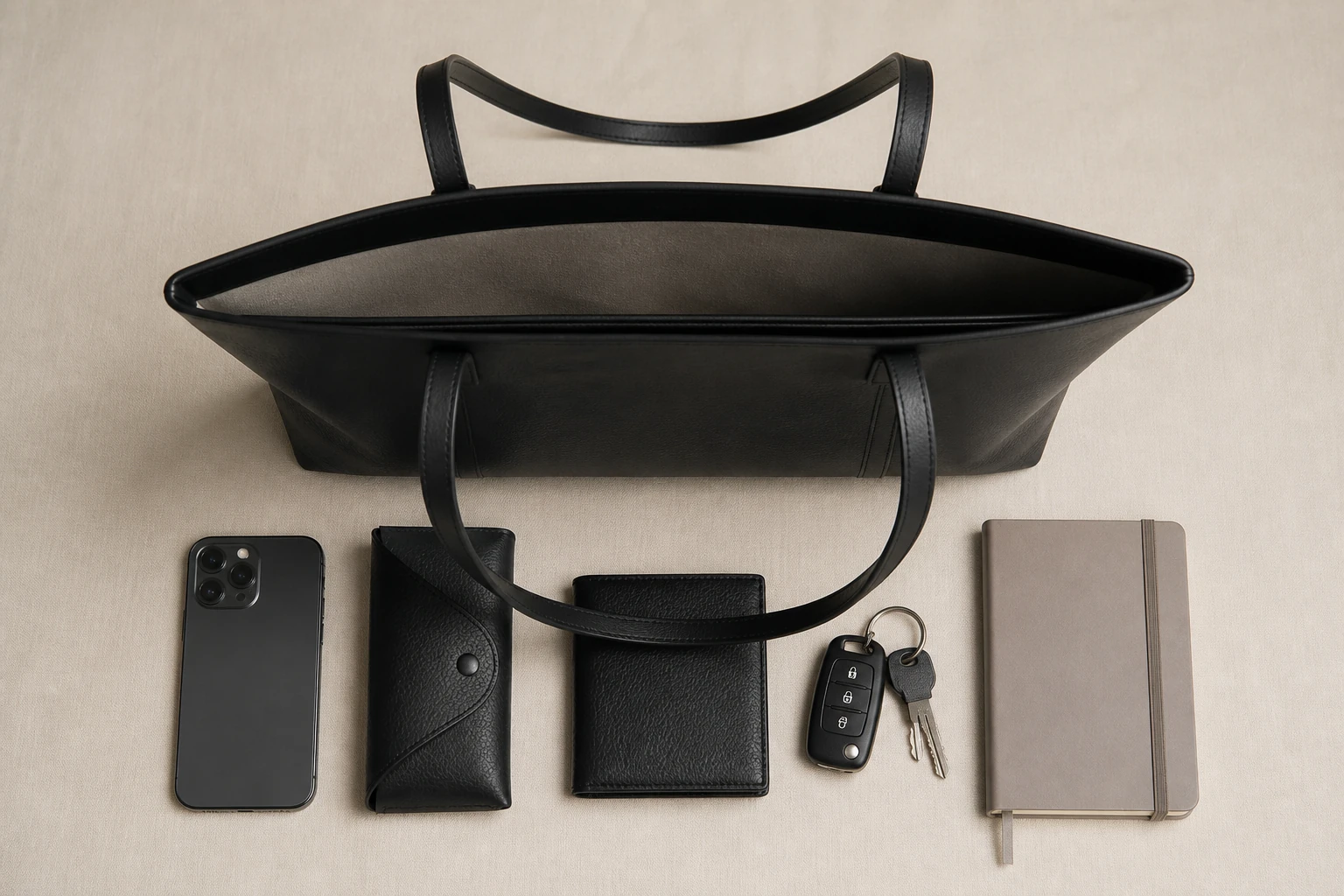
Try the one-layer rule
Lay out what you actually carry. If the rigid items can sit in one layer without stacking, a flat tote has a chance to remain flat. If the sunglasses case must sit on the wallet, or a bottle has to roll against the phone, you are buying a different shape once the bag is loaded.
Check four things:
- Opening: Can the widest object pass through without twisting the bag?
- Base: Is there enough depth to stand objects beside one another, or will they pile up?
- Closure: Does a zipper or magnetic tab still meet when the center is full?
- Handle pull: Do the handles drag the top edge inward as weight increases?
None of these is a defect by itself. The useful question is whether you love the bag as an object or as a container. A flat tote can be perfect for a notebook, cardholder, phone and slim pouch. It is less convincing when asked to impersonate a weekend bag.
The expensive look has a capacity limit
Minimal bags are visually unforgiving. On a slouchy tote, one soft fold looks intentional. On a flat geometric bag, a single bulge becomes the main design feature. That is why “roomy” and “keeps its shape” can pull in opposite directions.
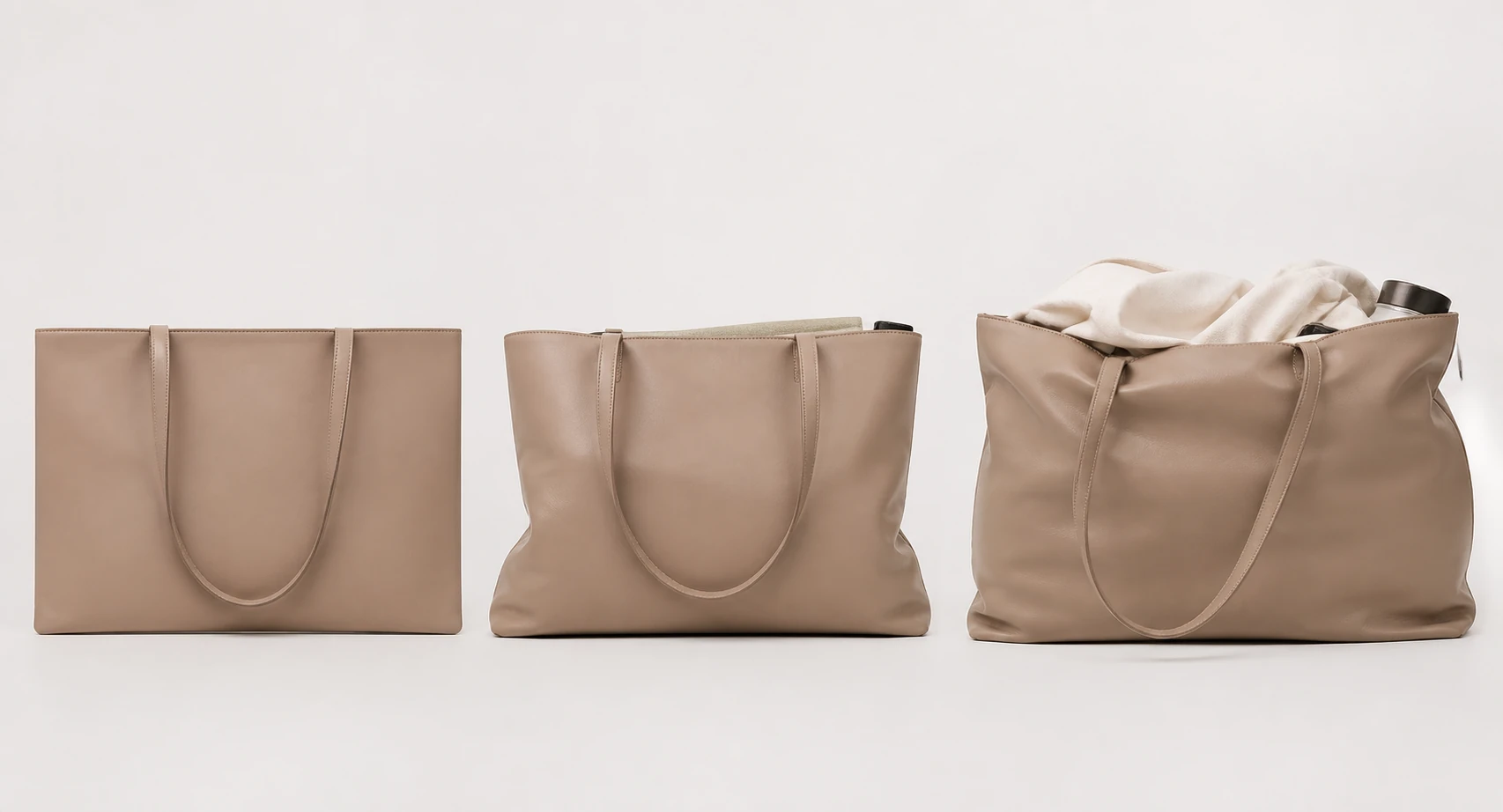
For designers, this creates a real choice: protect the thin profile, add hidden depth, or show the bag honestly under load. For shoppers, it creates an even simpler choice: bring the largest rigid object you carry when trying the bag—or trace its dimensions on paper before ordering online.
Here is the opinion worth arguing about: a bag is not impractical because it carries little. It is impractical when its appearance promises a job its geometry cannot do.
Would you choose the pristine empty silhouette or the slightly deeper version that survives real life? Compare this capacity question with our guide to handbag design and development, or browse another real-life bag detail discussion.
Sources
- It’s Official: This Is the Biggest Bag Trend of 2026 — Who What Wear (accessed August 24, 2026).
- Meet the East-West Bag, Spring’s Must-Have Shape — Vogue (accessed August 24, 2026).